Sacred Heart Primary School
Striving for Greatness Together
Numeracy
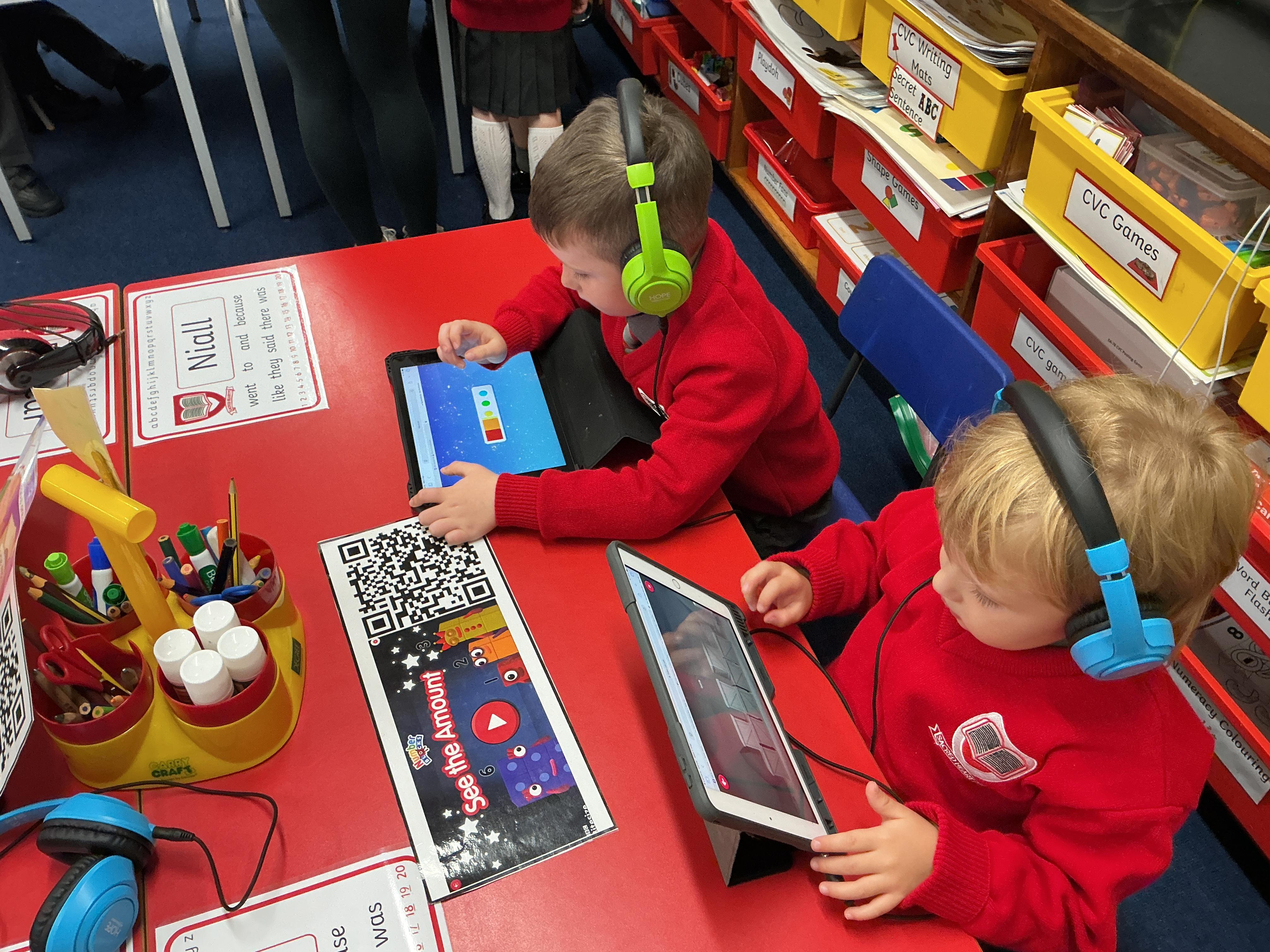
P1 have been exploring numbers beyond 10 by recognising them as one full group of 10 and some more. They investigated this using Numicon, ten frames, base 10, threading beads, and place value games on the IPADS.


P2 have been practising counting in 2s, 5s and 10s through a range of games during play based learning.


Today, the children explored one more and one less through a range of play based activities. They used number tracks, played splat the number, worked with number strips on whiteboards, enjoyed board games, and engaged with more/less games on the iPad. Throughout the session, the children were able to choose the number range they felt confident working within.


Today, P2 created chalk number lines outside, using different starting and ending numbers up to 50. They were given number cards and estimated where their number belonged on the line. To finish, the children worked together to fill in the missing numbers on the number lines.


Today, P2 explored partitioning numbers within 50 into tens and ones. They enjoyed creating part whole models with chalk, using a mix of numbers and amounts represented with sticks and stones. They worked together to partition the numbers into tens and ones. To finish, they created their own number line from 20–30, using sticks to represent tens and stones to represent ones.


Today P2 explored tens and ones by building numbers independently on their whiteboards and identifying the number before and after. They then worked collaboratively to complete a broken number track on the floor, placing the number cards in the correct order.


Counting On- P1 explored adding on a number line outside today by physically jumping and writing our sums in chalk.


This week, the children explored 3D shapes through a range of activities. They created patterns using 3D blocks, matched 3D shapes in a pairs game, and described their properties in a "Guess What Shape?" game. Using clues such as curved edges, flat faces, and whether a shape could roll or stack. The children pressed 3D shapes into playdough to see what 2D prints they could see. They also enjoyed playing 3D shape games on the iPads.
Today, the children enjoyed a trip to the beach to explore 3D shapes. They identified the differences between 2D and 3D shapes and had fun building a variety of shapes in the sand. They used their problem-solving skills and demonstrated excellent teamwork.


Today we measured height using different objects from our classroom. The children practised good measuring techniques, starting from the bottom and going to the top. They chose the most appropriate objects to measure with (bricks, links or cubes) and compared the heights of different items.


Children completed a range of practical activities to consolidate their understanding of numbers up to 9. They had fun writing their part whole models on the table and using ten frames and numicon to help.


Children explored the concept of long and short through play. They made long and short chains with the links, long and short playdough snakes, ordered long and short caterpillars and played a long and short game on the IPAD. All children were able to say if something was long or short. Children compared which chain was longer and we talked about how they both have to start at the same place to compare. We had a go at using rulers to measure and talked about units of measurement.


P1 have been working on subitising and instantly recognising amounts up to 10. Today, they made their own snap games and had great fun recognising matching amounts.


P2 have been working on mental maths strategies. Today, they practised 'making 10' and used ten frames to help them.


We have enjoyed finding doubles and playing addition games during play.


We have been working on finding one more and one less than a number through a range of games and practical activities.


We used Blockzee to help us compare numbers. The children loved making their own number sentences — and Blockzee always picked the bigger number!


We used Numicon, Numberblocks, ten frames, iPad games and even spiders to explore number bonds. The children investigated commutativity by recognising that numbers can be added in any order to make the same total, and they practised developing automatic recall of number bonds through hands-on activities and interactive games.


P1 used Numicon, ten frames, and games on the iPad to explore the composition of 4, while P2 explored the composition of 10.


P2 have been revising number bonds to 10 using ten frames.


P2 explored addition using part whole models.


We have been learning all about 2D shapes through a range of play based activities. P2 have been working on describing the properties of 2D shapes and using some great mathematical vocabulary.


As part of our WAU topic The Forest, P1 enjoyed collecting and sorting leaves by colour, shape, and size. P1s continued this activity for homework and sent some lovely pictures of them sorting different autumn treasures. Meanwhile, P2 took things a step further leading the activity by creating their own sorting criteria, showing great independence and problem-solving!